

What Is RF Microneedling, Benefits & FAQs
Oct 20, 2026
RF microneedling has become a popular skin rejuvenation treatment for people who want to improve skin texture, soften fine lines, and reduce the appearance of acne scars without undergoing surgery. By combining traditional microneedling with radiofrequency (RF) energy, this treatment works beneath the skin's surface to support collagen remodeling and improve the overall appearance of the skin.
What Is RF Microneedling?
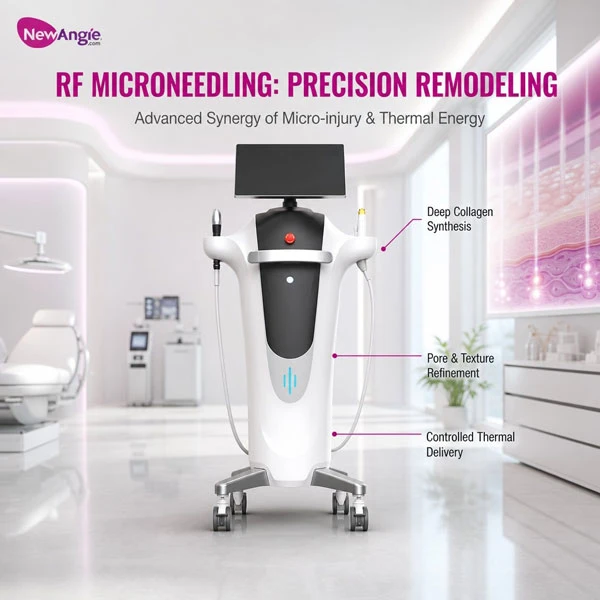
RF microneedling, short for radiofrequency microneedling, is a minimally invasive aesthetic procedure that combines fine needles with radiofrequency energy. The needles create controlled micro-injuries in the skin while RF energy delivers heat to targeted tissue.
This combination stimulates the skin's natural repair response and supports collagen and elastin remodeling. Over time, these processes may help improve skin firmness, smooth uneven texture, and reduce the visibility of certain scars and wrinkles.
Traditional microneedling relies mainly on mechanical stimulation. RF microneedling adds thermal energy, allowing practitioners to target specific tissue depths according to the device design and treatment settings.
RF microneedling is commonly offered in dermatology clinics, medical spas, and other professional aesthetic settings. It is not a surgical facelift, and results vary depending on the individual's skin condition, treatment plan, and practitioner experience.
How Does RF Microneedling Work?
RF microneedling works through two main mechanisms.
1. Controlled Microneedle Stimulation
Fine needles penetrate the skin to a selected depth, creating small, controlled micro-injuries. This triggers the body's natural healing response, which plays a role in collagen production and tissue remodeling.
The treatment depth and needle configuration depend on the equipment and the area being treated.
2. Radiofrequency Energy Delivery
Radiofrequency energy generates heat within the targeted tissue. This controlled heating supports collagen remodeling and may contribute to improvements in skin texture and firmness.
Different devices use different needle designs, energy delivery methods, and treatment parameters. The practitioner must select appropriate settings based on the client's needs and the manufacturer's instructions.
3. Gradual Skin Remodeling
After treatment, the skin begins its recovery process. Collagen remodeling continues over time, so improvements generally develop gradually rather than appearing immediately.
Some people notice changes within several weeks, while further improvements may develop over the following months. The degree of improvement depends on factors such as age, skin condition, treatment intensity, and aftercare.
What Are the Benefits of RF Microneedling?
1. Improves the Appearance of Acne Scars
RF microneedling may help reduce the visibility of certain atrophic acne scars by encouraging collagen remodeling in the treated area. It may be particularly useful for selected shallow or rolling scars.
However, deep or tethered scars may require other procedures or a combination of treatments. A qualified practitioner should assess the type and severity of the scars before recommending a treatment plan.
2. Supports Firmer-Looking Skin
As collagen and elastin contribute to skin structure, changes in these components can affect skin firmness. RF microneedling uses controlled thermal energy and microneedle stimulation to support tissue remodeling.
It may help improve the appearance of mild skin laxity, particularly around the cheeks and jawline. However, it cannot reproduce the lifting results of surgical procedures.
3. Reduces the Appearance of Fine Lines
Fine lines can become more visible as the skin changes with age and repeated facial movement. RF microneedling may help soften the appearance of selected fine lines by improving skin texture and supporting collagen remodeling.
Results depend on the depth of the lines, the treatment area, and individual skin characteristics.
4. Refines Skin Texture and Enlarged Pores
Uneven skin texture and visible pores are common concerns among people seeking professional facial treatments. RF microneedling may help create a smoother-looking surface over a series of treatments.
Pore size is also influenced by genetics, oil production, and other factors, so results should not be described as permanent pore removal.
5. Offers a Non-Surgical Skin Rejuvenation Option
RF microneedling does not require surgical incisions. It may appeal to people seeking improvement in skin texture and firmness without undergoing surgery.
Nevertheless, the procedure penetrates the skin and can cause temporary redness, swelling, and other side effects. Recovery time varies according to the device and treatment intensity.
6. Can Be Customized for Different Skin Concerns
Professional RF microneedling systems may offer adjustable needle depths and energy settings. This allows trained practitioners to tailor treatments to the individual and the treatment area.
Customization does not mean that higher energy or deeper penetration is always better. Appropriate settings are essential for balancing treatment goals and safety.
RF Microneedling vs. Traditional Microneedling
Although both procedures use fine needles, there is an important difference between them.
|
Feature |
RF Microneedling |
Traditional Microneedling |
|---|---|---|
|
Technology |
Needles combined with RF energy |
Mechanical needle stimulation |
|
Heat delivery |
Yes |
No RF heating |
|
Main treatment goals |
Skin texture, selected acne scars, fine lines, mild laxity |
Skin texture, selected scars, fine lines |
|
Treatment depth |
Depends on device and settings |
Depends on device and settings |
|
Downtime |
Redness, swelling, and possible downtime |
Redness, sensitivity, and possible downtime |
|
Main risks |
Needle-related injury plus thermal complications |
Needle-related injury and infection risks |
Neither treatment is automatically the best choice for everyone. The appropriate option depends on skin concerns, medical history, desired results, and professional assessment.
What Happens During an RF Microneedling Treatment?
Understanding the treatment process can help clients prepare for their appointment.
Step 1: Consultation
The practitioner reviews the client's skin condition, medical history, treatment goals, and potential contraindications. Expected benefits, limitations, and risks should be explained before treatment.
Step 2: Skin Preparation
The treatment area is cleansed according to the clinic's protocol. If a topical anesthetic is appropriate, it should be used according to professional guidance and applicable requirements.
Step 3: Treatment
The practitioner uses an RF microneedling handpiece to treat the selected area. Needle depth, RF energy, and technique are chosen according to the device instructions and individual assessment.
Clients may feel pressure, warmth, or discomfort during the procedure.
Step 4: Post-Treatment Care
The skin may appear red or swollen immediately afterward. The practitioner provides instructions for gentle cleansing, sun protection, and avoiding irritating skincare products while the skin recovers.
How Long Does It Take to Recover?
Recovery varies with treatment intensity, needle depth, individual sensitivity, and the device used.
First 24–72 hours: Redness, swelling, sensitivity, or mild pinpoint marks may occur.
Following several days: Mild dryness, roughness, or temporary skin changes may continue.
Following several weeks: The skin continues its remodeling process, and gradual improvements may become noticeable.
These timeframes are general examples rather than guarantees. More intensive treatments may involve longer recovery periods. Clients should follow their practitioner's aftercare instructions and seek medical advice if they develop severe pain, blistering, increasing redness, signs of infection, or unexpected skin changes.
How Many RF Microneedling Sessions Are Needed?
The number of sessions depends on the treatment goal and the individual's skin condition. Some people may benefit from a series of treatments spaced several weeks apart, while others may require a different approach.
For example, someone addressing mild texture concerns may need a different plan from someone treating established acne scars. A practitioner should evaluate progress before recommending additional sessions.
Collagen remodeling takes time, so the final outcome should not be judged immediately after treatment. More frequent or more aggressive sessions do not necessarily produce better results.
Frequently Asked Questions About RF Microneedling
1. Is RF microneedling painful?
Discomfort varies between individuals and depends on the treatment area, settings, and personal sensitivity. A topical anesthetic may be used when appropriate. Clients should discuss pain management with their practitioner before the procedure.
2. Is RF microneedling safe for all skin tones?
RF microneedling may be suitable for a range of skin tones, but it is not risk-free. Burns, post-inflammatory hyperpigmentation, hypopigmentation, and scarring can occur. Careful assessment, suitable settings, and practitioner experience are important, particularly for people prone to pigmentation changes.
3. How long do RF microneedling results last?
Results vary depending on the person's skin condition, age, treatment protocol, and lifestyle. Improvements may persist for months or longer, but the skin continues to age naturally. Maintenance treatments may be considered when appropriate.
4. Can RF microneedling treat acne scars?
It may improve the appearance of certain atrophic acne scars by supporting collagen remodeling. However, it is not equally effective for every scar type. Deep scars, active acne, or other skin conditions may require a different treatment approach.
5. Can RF microneedling tighten loose skin?
It may improve the appearance of mild skin laxity. It is generally less suitable for substantial loose skin, which may require other treatment options. Results should not be compared directly with surgical lifting.
6. Can RF microneedling be combined with other treatments?
Some combination approaches may be appropriate, but the timing and compatibility of treatments must be carefully evaluated. Combining procedures too closely may increase irritation, infection, or other complications. Follow the device instructions and qualified clinical guidance.
7. Who should avoid RF microneedling?
People with active skin infections, open wounds, certain inflammatory skin conditions, impaired wound healing, or other relevant medical concerns may need to postpone or avoid treatment. Certain implanted electronic devices or medications may also require special consideration. Pregnancy and other health circumstances should be reviewed according to professional guidance and the device instructions.
8. Is RF microneedling suitable for men?
Yes, it may be suitable for men who want to improve the appearance of acne scars, fine lines, uneven texture, or mild skin laxity. Suitability depends on the individual's skin condition, hair distribution in the treatment area, and medical history.
9. What should I avoid after RF microneedling?
Clients are generally advised to avoid harsh exfoliants, irritating active ingredients, excessive heat, and direct sun exposure while the skin recovers. The exact restrictions depend on the procedure and practitioner instructions. Do not apply unapproved products to freshly treated skin.
10. What is the difference between RF microneedling and laser skin resurfacing?
RF microneedling delivers radiofrequency energy through a needle-based handpiece. Laser resurfacing uses optical energy to target skin structures, with different lasers producing different effects. The technologies have different indications, risks, and recovery profiles. The best choice depends on the skin concern and professional assessment.
Is RF Microneedling Worth Considering?
RF microneedling can be a useful option for people seeking gradual improvements in skin texture, selected acne scars, fine lines, and mild skin laxity. Its combination of needle stimulation and radiofrequency heating offers a different approach from traditional microneedling alone.
However, it is not a universal solution for every skin concern. Realistic expectations, careful client selection, appropriate treatment settings, and qualified practitioners are essential to achieving a satisfactory outcome.
For aesthetic clinics, medical spas, and professional skincare businesses, an RF microneedling machine may also complement existing skin rejuvenation services. When evaluating equipment, consider the device's intended use, adjustable parameters, needle cartridge design, training requirements, after-sales support, and regulatory status in your market.
The best treatment plan is one that matches the client's needs while prioritizing safety and realistic results.


